One finished Bresse gives the usual eight — two breasts, two thighs, two drums, two wings — plus the two tenders and the pair of oysters. What sets it apart is the yield: fine bone means more of the dressed weight is edible meat, the marbling fat renders golden and worth saving, and the light frame makes an unusually deep, gelatinous stock. Very little of this bird is waste.
What one Bresse yields, piece by piece
A whole finished Bresse breaks into the same primal pieces as any chicken, so nothing here is exotic. What is different is how much of the bird is worth keeping, piece by piece, and the table below reads it that way: each part, and what makes it notable on a Bresse rather than an ordinary chicken.
| The piece | What you get on a Bresse |
|---|---|
| Breasts (×2) | Dense and marbled; the fat inside the muscle keeps them moist through a full roast |
| Tenders (×2) | The strips under the breast — small, silky, quick-cooking |
| Thighs (×2) | Deep, savory dark meat, almost confit-rich |
| Drumsticks (×2) | Firm, well-worked muscle from months of foraging |
| Wings (×2) | Small but flavorful; skin crisps thin and glassy |
| Oysters (×2) | The prized nuggets along the backbone — the cook's reward |
| The frame | Fine bone; renders a deep, gelatinous stock unlike a broiler's thin one |
| The fat | Golden and abundant for a chicken; worth saving by the jar |
How each of those cooks — and how the taste differs from a store bird part by part — is the job of the tasting notes. This page stays on what the carcass gives you.
Why the yield beats an ordinary chicken
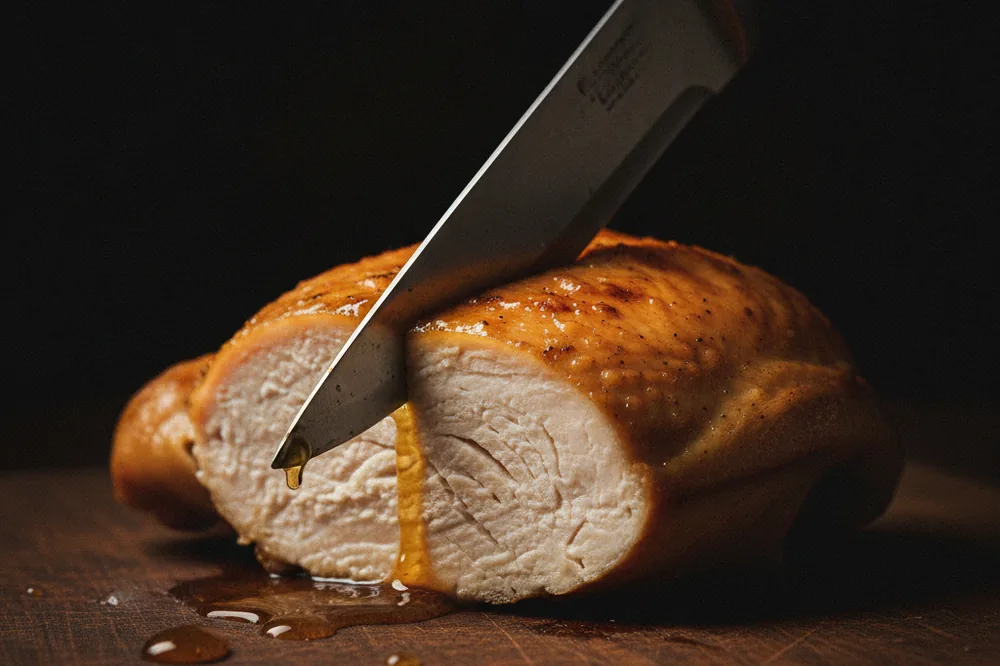
The Bresse advantage on the cutting board comes down to bone. A Bresse frame is light for the meat it carries, so a higher share of the dressed weight is meat you can eat instead of bone you throw away. The bird carves clean, and the pieces come off neat. Add the marbling, fat woven inside the muscle rather than piled under the skin, and even the trim is useful: it renders into clean fat instead of cloudy scrap. Why the breed carries fine bone and marbling at all is a story for the breed's hub at AmericanBresse.com. On the board, the payoff is plain: more of the bird is food.
The last piece of the yield is the frame itself. A broiler skeleton is soft and gives a thin stock. A Bresse frame is fine, dense, and rich in the connective tissue that turns a pot deep and gelatinous. Between the meat, the saved fat, and that stock, one bird stretches a long way, which matters when it cost 16-plus weeks of feed to raise. What that came to is on the Bresse meat price page.
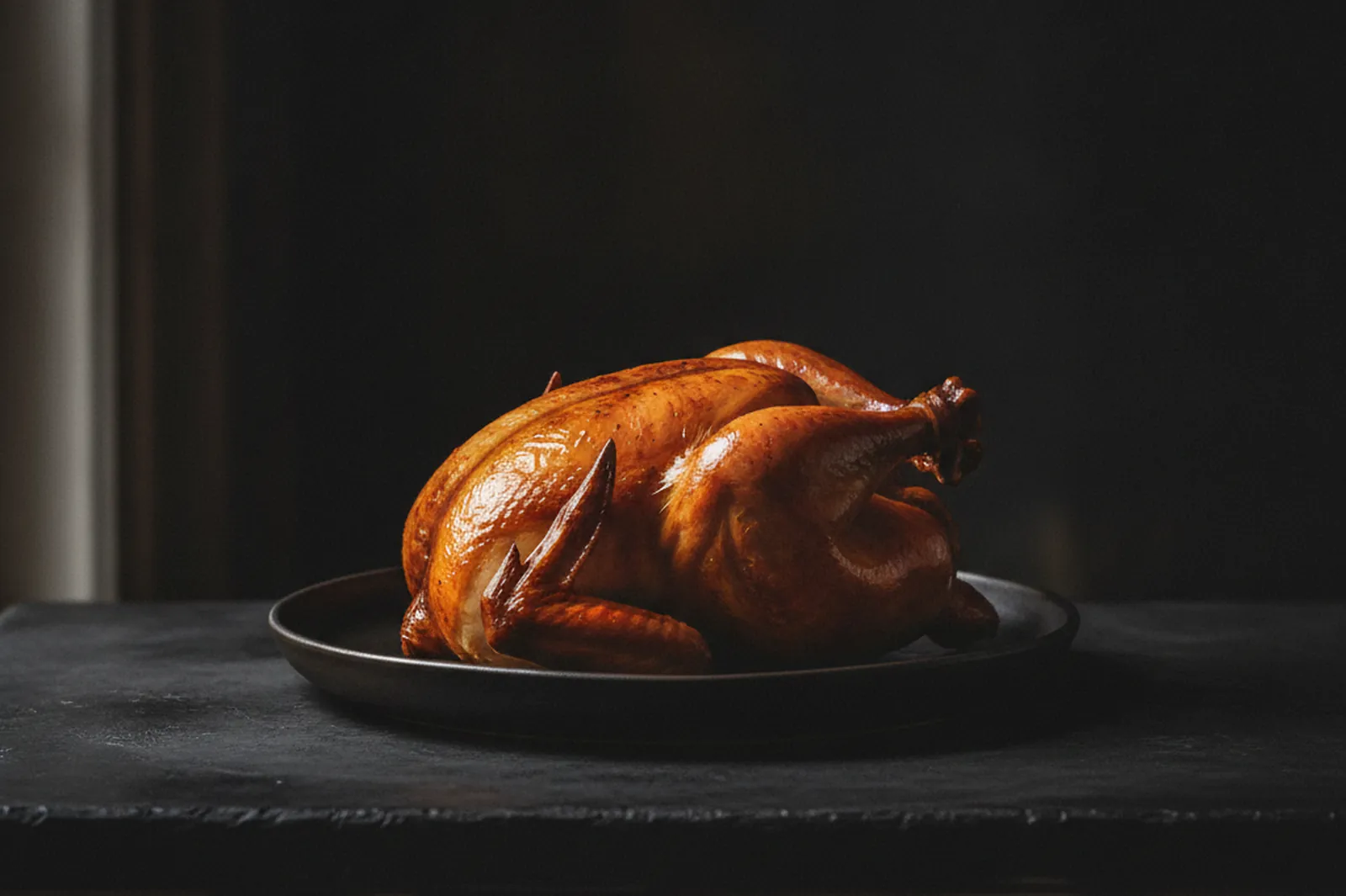
What should my first finished bird yield? Is my carcass supposed to look like this? Get Your Answers Live at the Weekly Coffee Hour Q&A.
Join the call on Monday (Free)The case for the whole bird
Because so little of a Bresse is waste, the bird rewards being used whole rather than reduced to a pack of breasts. The prime cuts carry the roast, the dark meat and oysters feed the cook, the saved fat cooks the rest of the week, and the frame becomes stock. An older bird, a retired layer or one past the roasting window, belongs in a braise or a poach, where time turns firm muscle silky. The French built whole dishes around exactly those birds. Matching the dish to the bird's age is its own craft, and the network's paid cutting and cooking guides at americanbressechickens.com are the next step once you have a bird in hand. Deciding whether to raise that bird at all? The Bresse vs Cornish Cross comparison and the where to buy page are the two that settle it.
Take the guide with you
This chapter lands in your inbox with the rest of the guide: all 6 chapters. Then the working emails start, one job at a time: the farm search, the price check, the first roast. They run until a marbled bird you raised or sourced yourself is on your own table.
Carcass and cuts, answered
What cuts do you get from one Bresse chicken?
The usual eight: two breasts, two thighs, two drumsticks, and two wings, plus the two tenders under the breasts and the pair of oysters along the back. What's different is the frame left over: fine Bresse bone means more of the bird's weight is edible meat, and the light carcass makes an unusually deep, gelatinous stock.
Why does a Bresse carcass yield more meat than an ordinary chicken?
Fine bone. A Bresse frame is light for the meat it carries, so a higher share of the dressed weight is meat you can eat rather than bone you discard. The breed was bred for centuries toward table quality, and the fine skeleton is part of that. The bird carves clean and leaves a lean, useful frame.
Is Bresse fat worth saving?
Yes. A finished Bresse renders golden, clean fat worth keeping by the jar, and because the breed marbles, some of that fat sits inside the muscle and bastes the meat as it cooks. Ordinary chicken keeps its scant fat under the skin, cloudy and easy to throw away. On a Bresse the fat is part of the yield.
How much does a finished Bresse carcass weigh?
It varies by line, sex, and finishing, but a finished American Bresse cockerel dresses out as a full table bird at 14–19 weeks. Because the bone is fine, the dressed weight carries a high proportion of meat. Exact weights are a per-bird, per-farm figure rather than a fixed number.